
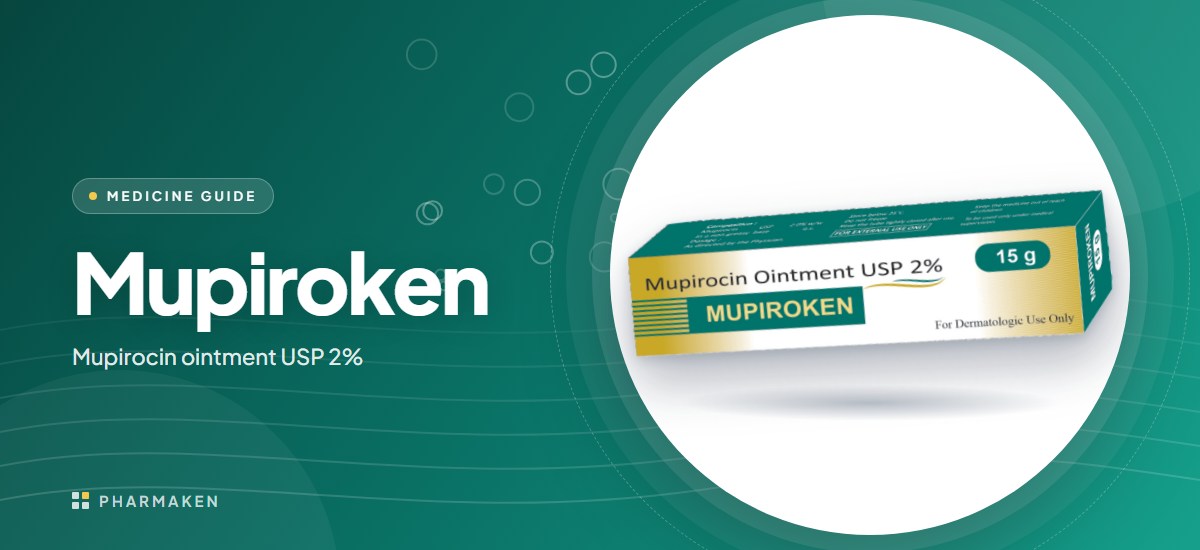
Superficial bacterial skin infections are among the most common reasons for clinic visits in Kenya, especially in children. For localised infections, a topical antibiotic avoids the side effects and resistance pressure of oral treatment. Mupiroken mupirocin ointment is designed for this purpose. It contains mupirocin 2% and targets the two organisms behind most skin infections: Staphylococcus aureus and beta-haemolytic streptococci. This guide explains how mupirocin works, when to use it and how to apply it correctly.

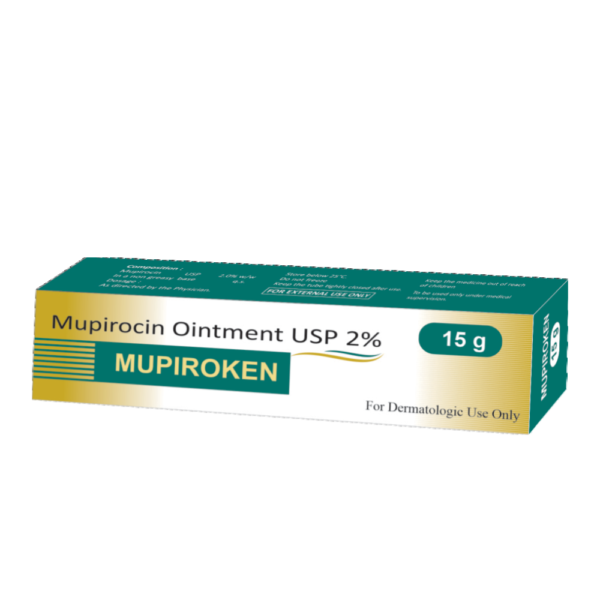
Available from Pharmaken: Mupiroken ointment.
What is Mupiroken (mupirocin)?
Mupiroken is a topical ointment containing mupirocin 2% w/w in a water-miscible base. Mupirocin, originally called pseudomonic acid A, comes from the bacterium Pseudomonas fluorescens. It is unrelated to any other antibiotic class in clinical use. For this reason, cross-resistance with systemic antibiotics is very unlikely.
Note that Mupiroken is an antibacterial, not an antifungal. It has no useful activity against fungal skin infections such as ringworm or candidiasis.
How Mupiroken mupirocin works
Mupirocin has a unique mode of action. It binds bacterial isoleucyl-transfer RNA synthetase, the enzyme that loads the amino acid isoleucine onto its transfer RNA. Without this step, the bacterium cannot build proteins. As a result, bacterial growth stops.
At the low concentrations reached in tissue, mupirocin is bacteriostatic. However, the high concentrations achieved on the skin after topical application make it bactericidal. Furthermore, the drug barely enters the bloodstream through intact skin. Any absorbed mupirocin is quickly converted into inactive monic acid. Consequently, systemic side effects are rare.
Spectrum of activity
- Staphylococcus aureus, including many methicillin-resistant (MRSA) strains;
- Streptococcus pyogenes and other beta-haemolytic streptococci;
- coagulase-negative staphylococci.
In contrast, mupirocin has little activity against most Gram-negative bacteria, anaerobes and fungi.
What is Mupiroken used for?
Clinicians use Mupiroken mupirocin ointment for primary and secondary superficial skin infections, including:
- Impetigo, both non-bullous and bullous forms, when lesions are limited in number and area;
- Folliculitis, an infection of hair follicles;
- Furunculosis (boils), as an adjunct to drainage where needed;
- Secondarily infected wounds, such as small lacerations, abrasions, insect bites and sutured wounds;
- Infected eczema and ulcers, when the infected area is small.
Extensive impetigo, cellulitis, systemic symptoms or deep abscesses need oral or parenteral antibiotics instead. Likewise, large abscesses need incision and drainage.
Dosage and how to apply
- Wash the affected area gently with soap and water, then pat it dry.
- Apply a thin layer of ointment to the affected area up to three times daily, roughly every eight hours.
- Cover with a sterile dressing if desired, or leave the area uncovered.
- Wash hands before and after each application.
- Continue for up to 10 days.
Most infections improve within three to five days. If there is no response after five days, reassess the diagnosis and consider a culture. In addition, do not use mupirocin for longer than 10 days, because prolonged use encourages resistance and fungal overgrowth.
Contraindications and precautions
- Hypersensitivity: do not use it in patients allergic to mupirocin or the ointment base.
- Eyes and nose: this ointment is not for use in the eyes or inside the nose. Separate nasal formulations exist for decolonisation.
- Large wounds and burns: the polyethylene glycol base can be absorbed through large open areas. In moderate or severe kidney impairment, absorbed polyethylene glycol may accumulate, so avoid extensive use.
- Resistance: widespread or repeated use promotes mupirocin-resistant staphylococci. Reserve it for confirmed or clearly suspected bacterial infections.
- Superinfection: long courses can allow fungi or resistant bacteria to grow.
Side effects
Mupiroken is generally well tolerated. Possible local effects include:
- burning, stinging or itching at the site;
- redness or dryness;
- contact dermatitis, which is uncommon.
Systemic allergic reactions, such as generalised rash or swelling, are rare. Stop the ointment if they occur.
Drug interactions
Because so little mupirocin enters the bloodstream, no clinically important systemic interactions are known. However, avoid mixing it with other creams or ointments on the same area, because they may dilute it and reduce its effect.
Pregnancy, breastfeeding and children
Systemic exposure after topical use is minimal. Therefore, Mupiroken mupirocin may be used in pregnancy and breastfeeding when clinically needed. If treating a cracked nipple, wash the area thoroughly before breastfeeding. The ointment is suitable for children, which matters because impetigo is most common in young children.
Counselling points for pharmacists and clinicians
- Explain that impetigo is contagious until lesions crust over or for about 48 hours after starting treatment.
- Advise patients not to share towels, flannels or clothing during treatment.
- Encourage children to keep nails short and avoid scratching lesions.
- Remind patients to complete the course, even if the skin looks better.
- Ask them to return if lesions spread, fever develops or there is no improvement after five days.
The World Health Organization stresses that careful antibiotic use slows the spread of resistance. Accordingly, matching a narrow topical agent to a localised infection is good stewardship.
Storage
Store Mupiroken below 25 °C. Close the tube tightly after use, and discard any remaining ointment after the treatment course. Keep it out of the reach of children.
Where Mupiroken fits in practice
For a few localised impetigo lesions, topical treatment is the first choice. For example, guidelines often suggest hydrogen peroxide cream or a topical antibiotic such as mupirocin. However, when lesions are widespread, bullous or accompanied by fever, an oral antibiotic such as flucloxacillin is more appropriate. Likewise, recurrent boils may signal nasal carriage of Staphylococcus aureus. In that case, specialists may recommend a decolonisation regimen with a nasal product. Meanwhile, reserve mupirocin for clear bacterial infection, and avoid repeated courses. Finally, take a swab for culture when infections recur or fail to respond.
For healthcare professionals and facilities: request a quotation or product samples through the Pharmaken healthcare portal, or contact our Mombasa and Nairobi teams for product information.
Frequently asked questions
Can Mupiroken be used for fungal infections?
No. Mupirocin is an antibacterial. Fungal skin infections need an antifungal, such as an azole cream.
How long does Mupiroken mupirocin take to work?
Most patients see improvement within three to five days. Continue treatment for the full course, up to 10 days.
Can it be used on infected eczema?
Yes, for small infected areas. However, widespread infected eczema usually needs oral treatment.
Key takeaways
- Mupiroken mupirocin 2% ointment treats localised skin infections caused by staphylococci and streptococci.
- It has a unique mechanism, so cross-resistance with other antibiotics is unlikely.
- Apply it up to three times daily for no more than 10 days.
- Use oral antibiotics for extensive, deep or systemic infections.
References and further reading
- World Health Organization: Antimicrobial resistance fact sheet
- Approved product information for Mupiroken ointment (Pharmaken Ltd); always consult the package insert.
Important: This article is educational information for healthcare professionals. It does not replace the approved product information, clinical guidelines or professional judgement. Dosing must be individualised by the prescriber. Report suspected adverse drug reactions or poor-quality medicines to the Pharmacy and Poisons Board through pv.pharmacyboardkenya.org.