
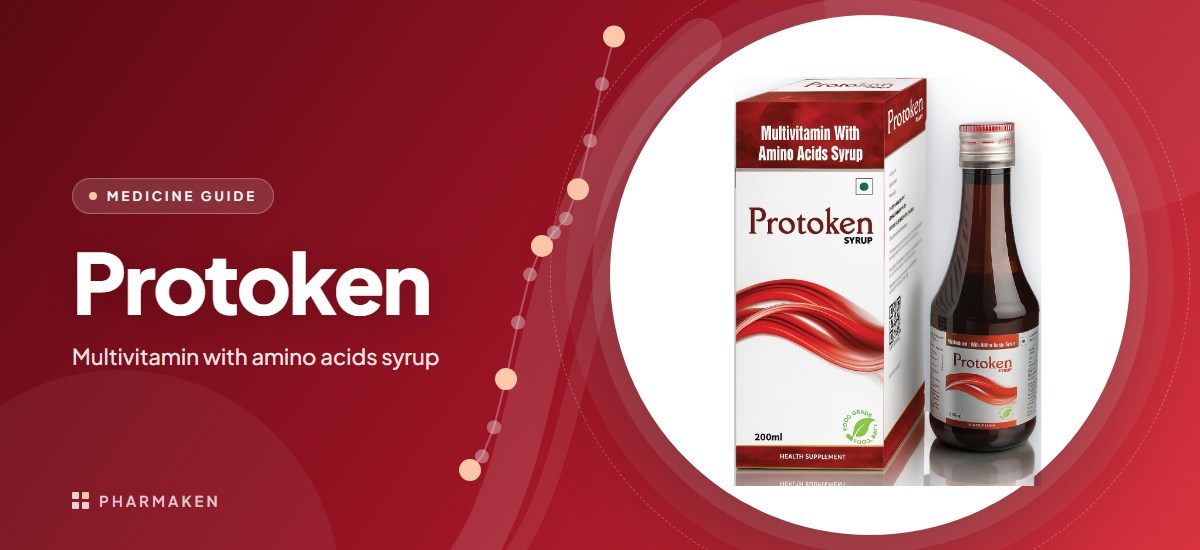
Protein is essential for growth, healing, immunity and muscle strength. However, many people do not get enough of it, especially during illness, recovery from surgery, older age or periods of poor appetite. Protoken amino acids supplement combines the essential amino acids with key vitamins. It aims to support nutrition when diet alone falls short. This guide explains what Protoken contains, how amino acids work in the body, who may benefit and how to use it sensibly.

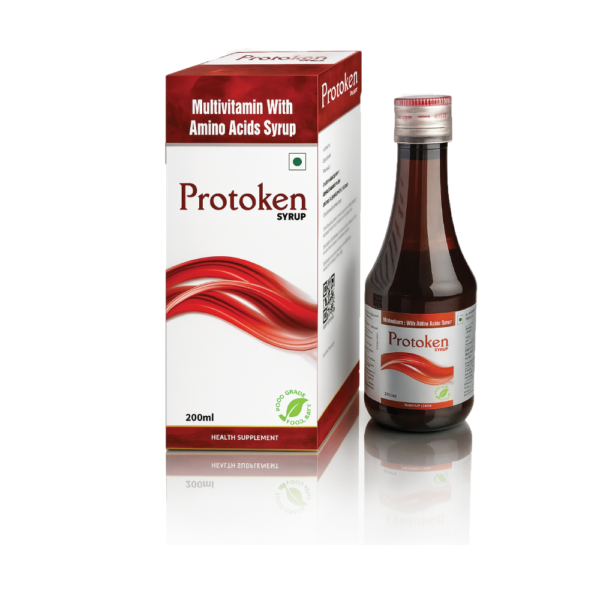
Available from Pharmaken: Protoken.
What is Protoken?
Protoken is a nutritional supplement from Pharmaken. It provides:
- The essential amino acids, the building blocks of protein that the body cannot make;
- Vitamins A (retinol), C, D and E;
- B-complex vitamins.
Protoken is presented as a syrup. Check the pack label for the exact amount of each nutrient and the recommended serving.
How Protoken amino acids support the body
Essential amino acids
Proteins are made from 20 standard amino acids. The body can make 11 of them. The other nine are “essential”, which means they must come from food: histidine, isoleucine, leucine, lysine, methionine, phenylalanine, threonine, tryptophan and valine. In adults, histidine is often listed separately, which is why some sources count eight.
Essential amino acids are needed to build and repair muscles, organs, skin, hair and nails. They also make enzymes, hormones, antibodies and neurotransmitters. Leucine, in particular, switches on muscle protein synthesis through the mTOR pathway. For this reason, it matters for preserving muscle in older adults and during recovery.
Vitamins
- Vitamin A supports vision, skin and immune function.
- B vitamins help release energy from food and support the nervous system.
- Vitamin C supports immunity and collagen formation for wound healing.
- Vitamin D supports bone health and muscle function.
- Vitamin E acts as an antioxidant that protects cell membranes.
Combining amino acids with vitamins makes sense, because vitamins act as co-factors in many of the reactions that use amino acids.
Who may benefit from Protoken?
Protoken amino acids supplementation may support people whose intake falls short of their needs, such as:
- People recovering from illness, surgery or injury, when protein needs rise for healing;
- Older adults with poor appetite, who are at risk of losing muscle (sarcopenia);
- People with poor appetite during or after infections or chronic illness;
- Adolescents and active people with high nutritional demands and irregular diets;
- People on restricted diets who struggle to eat enough protein.
Malnutrition affects both children and adults in Kenya, according to the World Health Organization. However, severe malnutrition needs proper medical treatment, such as therapeutic foods and close monitoring. A supplement alone is not enough.
What does the evidence show?
Studies show that adequate protein and essential amino acids help preserve muscle in older adults and support recovery after illness. Similarly, vitamin D supports bone and muscle health in people who are deficient. Nevertheless, supplements work best when they fill a real gap. In people who already eat a balanced diet, extra amino acids and vitamins add little benefit. Therefore, clinicians should assess diet first and use Protoken as part of a broader nutrition plan.
How to use Protoken
- Take Protoken as directed on the pack or by your clinician, usually after meals.
- Shake the bottle well before use if it is a syrup.
- Use it alongside a balanced diet rich in eggs, fish, meat, beans, lentils, milk and vegetables, not instead of food.
- Do not exceed the recommended amount.
Safety and precautions
- Kidney and liver disease: people with chronic kidney or liver disease may need protein restriction. They should use amino acid supplements only on medical advice.
- Phenylketonuria (PKU): people with PKU must avoid phenylalanine, which is an essential amino acid present in the supplement.
- Vitamin A: avoid taking several vitamin A-containing products together, because excess vitamin A can be harmful, especially in pregnancy.
- Diabetes: check whether the syrup contains sugar, and account for it in meal planning.
- Allergy: do not use if allergic to any ingredient.
Possible side effects
Most people tolerate Protoken well. Occasionally, people notice:
- mild stomach upset, nausea or bloating;
- diarrhoea;
- bright yellow urine, caused by riboflavin (vitamin B2), which is harmless.
Interactions
- Levodopa: amino acids may reduce its absorption, so separate the doses.
- Other multivitamins: avoid doubling up on vitamins A and D.
- Warfarin: very high doses of vitamin E may increase bleeding risk.
Pregnancy, breastfeeding and children
Pregnant women need specific nutrients, such as folic acid and iron, and must avoid excess vitamin A. Therefore, they should use Protoken amino acids only on medical advice. Likewise, children should use it only at the dose recommended for their age.
Counselling points
- Use Protoken to support, not replace, a varied diet.
- Combine nutrition with physical activity to build and maintain muscle.
- Seek medical advice for unintentional weight loss, which may signal an underlying illness.
Storage
Store below 30 °C, away from direct sunlight. Close the bottle tightly after use, and keep it out of the reach of children.
Where Protoken fits in nutritional care
Good nutrition care starts with a simple screen. For example, ask about recent weight loss, appetite and how much the person eats. Then, offer practical diet advice first, such as adding eggs, beans, milk or fish to meals. Next, when intake still falls short, a supplement such as Protoken amino acids can help fill the gap. In addition, older adults benefit from combining protein with regular strength exercise, which helps preserve muscle. Meanwhile, treat any underlying illness that reduces appetite. Finally, refer people with severe or rapid weight loss for full assessment, because it may signal serious disease.
For healthcare professionals and facilities: request a quotation or product samples through the Pharmaken healthcare portal, or contact our Mombasa and Nairobi teams for product information.
Frequently asked questions
Is Protoken a replacement for meals?
No. It supports a balanced diet but does not provide the energy or full nutrition of a meal.
Can people with kidney disease take Protoken amino acids?
Only on medical advice, because some kidney patients need to limit protein.
How long should it be taken?
Typically during recovery or a period of poor intake. Review its use with a clinician after a few weeks.
Key takeaways
- Protoken amino acids supplement combines essential amino acids with vitamins A, B, C, D and E.
- It supports nutrition during recovery, ageing and poor appetite.
- It works best when it fills a real gap in the diet.
- Seek medical advice in kidney or liver disease, PKU and pregnancy.
References and further reading
- World Health Organization: Malnutrition fact sheet
- World Health Organization: Musculoskeletal health fact sheet
- Approved product information for Protoken (Pharmaken Ltd); always consult the package insert.
Important: This article is educational information for healthcare professionals. It does not replace the approved product information, clinical guidelines or professional judgement. Dosing must be individualised by the prescriber. Report suspected adverse drug reactions or poor-quality medicines to the Pharmacy and Poisons Board through pv.pharmacyboardkenya.org.