

Allergic conditions such as hay fever and hives are extremely common, and they can disrupt sleep, school and work. Cezine cetirizine provides fast, once-daily relief with little drowsiness. Cetirizine is a second-generation antihistamine with a long safety record in adults and children. Pharmaken supplies Cezine as 10 mg tablets and as a 5 mg/5 mL syrup. This guide explains how cetirizine works, what it treats, how to dose it by age and what to watch for.

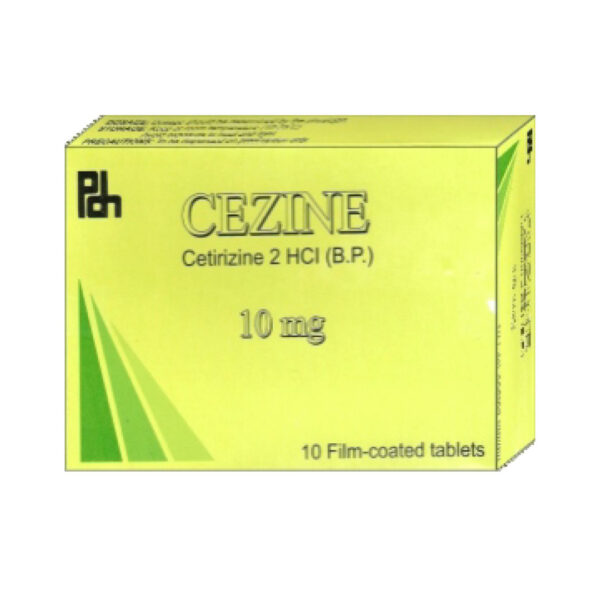
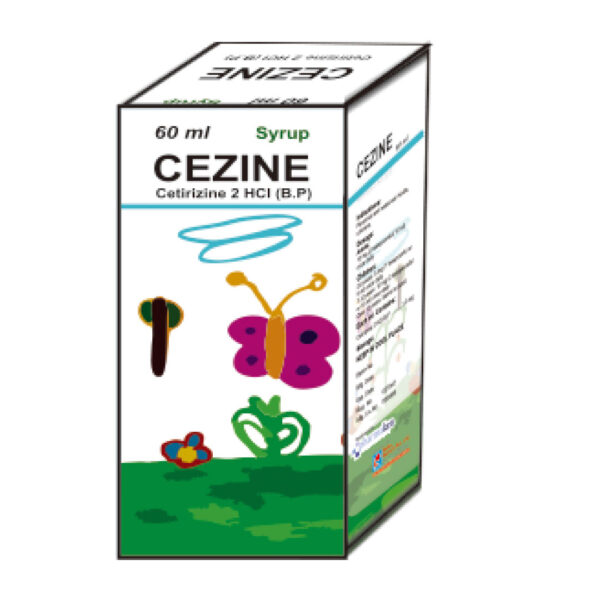
Available from Pharmaken: Cezine Tablets, Cezine Syrup.
What is Cezine (cetirizine)?
Cezine contains cetirizine dihydrochloride, a selective, peripheral H1-receptor antagonist. It is available as:
- Cezine tablets: cetirizine 10 mg film-coated tablets;
- Cezine syrup: cetirizine 5 mg per 5 mL (1 mg/mL), for children and for adults who prefer a liquid.
Cetirizine is the active metabolite of hydroxyzine, an older sedating antihistamine. Unlike hydroxyzine, however, it crosses into the brain only to a small extent. For this reason, it causes far less drowsiness at usual doses.
How Cezine cetirizine works
When an allergic person meets an allergen, such as pollen or house dust mite, mast cells release histamine. Histamine binds H1 receptors on nerves, blood vessels and glands. As a result, it causes:
- sneezing and an itchy, runny nose;
- itchy, watery eyes;
- itchy, raised welts on the skin (urticaria);
- swelling caused by leaky blood vessels.
Cetirizine blocks H1 receptors, so it prevents histamine from producing these effects. It starts working within 20 to 60 minutes, and one dose lasts about 24 hours. In addition, cetirizine has some anti-inflammatory activity. For example, it reduces the movement of eosinophils into allergic tissue.
What is Cezine used for?
Cezine cetirizine is indicated for:
- Seasonal allergic rhinitis (hay fever) and allergic conjunctivitis;
- Perennial allergic rhinitis, caused by dust mites, animal dander or moulds;
- Chronic spontaneous urticaria (hives), to relieve itching and reduce welts;
- Itchy allergic skin conditions, such as insect bite reactions and some allergic rashes.
Cetirizine does not treat asthma itself. Nevertheless, controlling allergic rhinitis can help patients whose asthma is triggered by allergies. Severe allergic reactions, such as anaphylaxis, need adrenaline, not antihistamines alone.
Dosage and administration
Adults and children aged 12 years and over
- 10 mg once daily, as one tablet or 10 mL of syrup.
Children aged 6 to 11 years
- 5 mg twice daily, which is 5 mL of syrup twice daily, or 10 mg once daily.
Children aged 2 to 5 years
- 2.5 mg twice daily, which is 2.5 mL of syrup twice daily.
Children under 2 years
Some labelling permits cetirizine from six months of age for specific allergic conditions, at a lower dose. However, use it in this age group only on medical advice, and with careful weight-based dosing.
Cezine can be taken with or without food. Measure the syrup with the cup or syringe provided, not a household spoon. If drowsiness occurs, an evening dose may help.
Kidney and liver impairment
The kidneys clear most of the drug. Therefore, halve the dose in moderate kidney impairment and reduce it further in severe impairment. Patients with both liver and kidney impairment also need dose reduction.
Contraindications
- hypersensitivity to cetirizine, hydroxyzine or other piperazine derivatives;
- severe kidney impairment with creatinine clearance below 10 mL/min.
Warnings and precautions
- Drowsiness: although uncommon, some patients feel sleepy. Advise caution with driving and machinery until they know how it affects them.
- Alcohol: avoid alcohol, because it can add to drowsiness.
- Urinary retention: use caution in men with an enlarged prostate or in spinal cord lesions.
- Epilepsy: use caution in patients at risk of seizures.
- Allergy skin tests: stop cetirizine at least three days before skin-prick testing, because it suppresses the result.
- Itching after stopping: rarely, intense itching occurs when long-term cetirizine is stopped.
Side effects
- drowsiness or fatigue;
- headache;
- dry mouth;
- dizziness;
- sore throat or nausea;
- agitation or restlessness in young children, which is uncommon.
Drug interactions
- Alcohol and other sedatives may increase drowsiness.
- High-dose theophylline can slightly reduce cetirizine clearance.
- Ritonavir increases cetirizine levels.
Cetirizine is not metabolised by the liver to any great extent. Consequently, it has few drug interactions overall.
Pregnancy and breastfeeding
A large amount of pregnancy data has not shown harm from cetirizine. For this reason, Cezine cetirizine is among the preferred antihistamines in pregnancy when treatment is needed. Small amounts pass into breast milk. Therefore, use it with caution while breastfeeding, and watch the infant for drowsiness or irritability.
Counselling points
- Take the dose at the same time each day during the allergy season, not only when symptoms are bad.
- Reduce allergen exposure, for example by washing bedding in hot water and keeping pets out of bedrooms.
- Seek emergency care for swelling of the lips, tongue or throat, or for difficulty breathing.
- Keep the syrup out of the reach of children, as its taste can attract them.
Storage
Store Cezine below 30 °C. Keep the syrup bottle tightly closed, and use it within the period stated on the pack after opening. Keep all medicines out of the reach of children.
Where Cezine cetirizine fits in allergy care
For mild or intermittent allergic rhinitis, a non-sedating antihistamine such as cetirizine is often all that is needed. However, when symptoms are persistent or congestion dominates, an intranasal corticosteroid works better. Then, cetirizine can be added for itching and sneezing. In chronic urticaria, meanwhile, guidelines recommend a second-generation antihistamine every day. If hives persist, specialists may increase the dose up to four times the standard dose, under supervision. In addition, older sedating antihistamines, such as chlorphenamine, are best avoided for regular use. Finally, refer patients with recurrent swelling of the lips or throat for specialist review.
For healthcare professionals and facilities: request a quotation or product samples through the Pharmaken healthcare portal, or contact our Mombasa and Nairobi teams for product information.
Frequently asked questions
Is Cezine cetirizine non-drowsy?
It causes much less drowsiness than older antihistamines. However, a small number of people still feel sleepy, so caution is wise at first.
Can Cezine be taken every day?
Yes. It is suitable for daily use throughout the allergy season or for chronic urticaria, under medical guidance.
Which form is best for children?
The 5 mg/5 mL syrup allows accurate dosing for young children.
Key takeaways
- Cezine cetirizine is a second-generation antihistamine in 10 mg tablets and 5 mg/5 mL syrup.
- It relieves sneezing, itching, runny nose and hives within an hour, for about 24 hours.
- Dose by age, and reduce the dose in kidney impairment.
- It causes little drowsiness, but advise caution with alcohol and driving.
References and further reading
- World Health Organization: Asthma fact sheet
- Approved product information for Cezine Tablets, Cezine Syrup (Pharmaken Ltd); always consult the package insert.
Important: This article is educational information for healthcare professionals. It does not replace the approved product information, clinical guidelines or professional judgement. Dosing must be individualised by the prescriber. Report suspected adverse drug reactions or poor-quality medicines to the Pharmacy and Poisons Board through pv.pharmacyboardkenya.org.