
Cefixime is one of the few oral third-generation cephalosporins. It brings strong Gram-negative coverage to outpatient care. Ceflorex cefixime comes from Pharmaken as 400 mg capsules for adults and as a 100 mg/5 mL dry syrup in 35 mL and 70 mL bottles for children. It is widely used for ear, throat, chest and urinary infections, and for typhoid fever. This guide explains how cefixime works, how to dose it and how to use it responsibly.

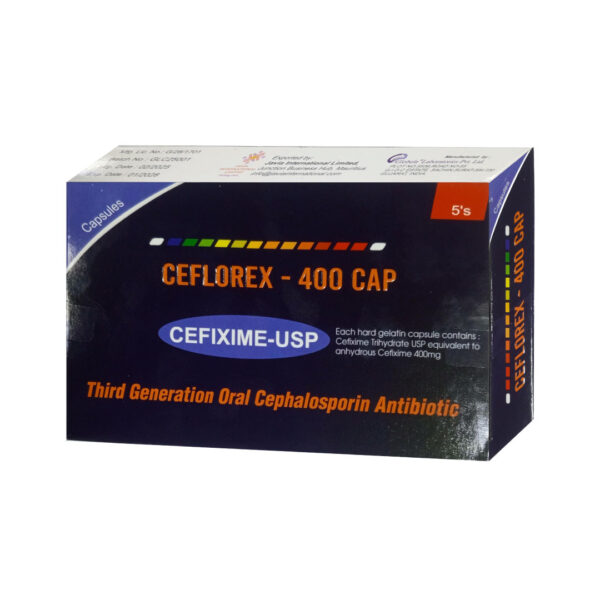
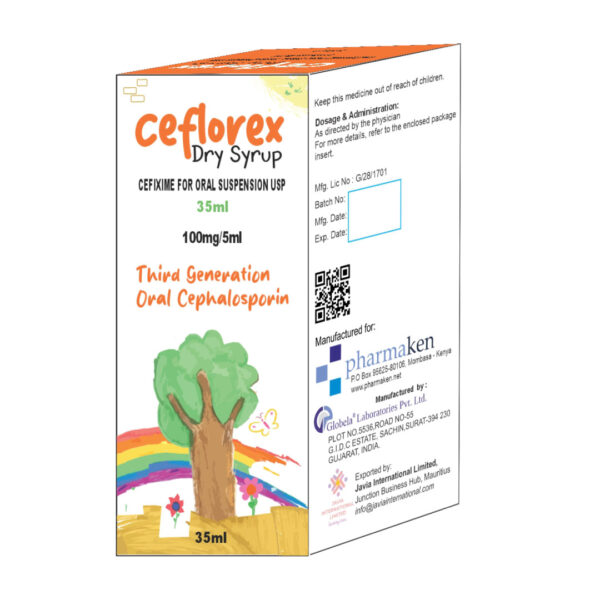
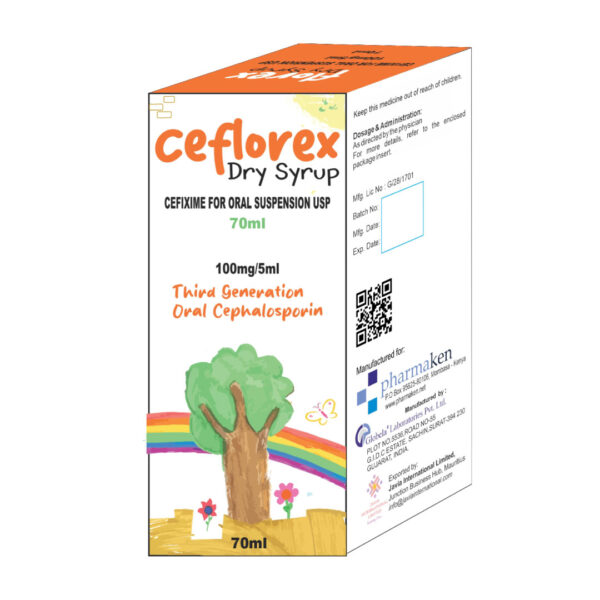
Available from Pharmaken: Ceflorex 400mg capsules, Ceflorex dry syrup 35ml, Ceflorex dry syrup 70ml.
What is Ceflorex (cefixime)?
Ceflorex contains cefixime trihydrate, an oral third-generation cephalosporin. It is available as:
- Ceflorex 400 mg capsules, in packs of five;
- Ceflorex dry syrup, cefixime 100 mg per 5 mL after reconstitution, in 35 mL and 70 mL packs.
Cefixime has a half-life of three to four hours, which is long for a cephalosporin. As a result, it can be given once or twice a day. The kidneys excrete about half of the absorbed dose unchanged, which gives high concentrations in urine.
How Ceflorex cefixime works
Cefixime is a beta-lactam antibiotic. It binds penicillin-binding proteins, the enzymes that build the bacterial cell wall. When these enzymes stop working, the wall becomes weak and the bacterium dies. Therefore, cefixime is bactericidal.
Its structure makes it stable against many common beta-lactamases. Consequently, it keeps activity against many organisms that resist amoxicillin, such as beta-lactamase-producing Haemophilus influenzae.
Spectrum of activity
- Gram-negative: H. influenzae, Moraxella catarrhalis, E. coli, Proteus mirabilis, Klebsiella, Neisseria gonorrhoeae, and Salmonella and Shigella species;
- Gram-positive: Streptococcus pyogenes and many S. pneumoniae strains.
However, cefixime has poor activity against Staphylococcus aureus. It also does not cover Pseudomonas, enterococci, Listeria or most anaerobes. Moreover, ESBL-producing organisms are resistant.
What is Ceflorex used for?
Prescribers use Ceflorex cefixime for susceptible infections, including:
- Ear, nose and throat infections: otitis media, sinusitis, pharyngitis and tonsillitis;
- Lower respiratory tract infections: acute bronchitis and exacerbations of chronic bronchitis;
- Urinary tract infections, including uncomplicated cystitis and pyelonephritis, guided by local resistance;
- Typhoid fever, including some multidrug-resistant strains, according to national guidelines;
- Step-down therapy after IV ceftriaxone, once the patient improves.
Typhoid fever remains common in parts of Kenya, according to the World Health Organization. Rising resistance to older drugs has made cephalosporins and azithromycin important options. Nevertheless, treatment should follow local susceptibility data.
Dosage and administration
Adults and children over 12 years: Ceflorex 400 mg capsules
- Usual dose: 400 mg once daily, or 200 mg twice daily.
- Duration: 5 to 10 days for most infections, and 7 to 14 days for typhoid, per guidelines.
- Uncomplicated gonorrhoea: 400 mg single doses were used in the past. Today, guidelines prefer ceftriaxone because of resistance, so follow current national guidance.
Children: Ceflorex 100 mg/5 mL dry syrup
- Usual dose: 8 mg/kg/day, given once daily or as 4 mg/kg twice daily.
- Typhoid fever: higher doses of 15 to 20 mg/kg/day in two divided doses have been used, according to guidelines.
- Example: a 15 kg child needs 120 mg a day, which is 6 mL once daily or 3 mL twice daily.
To reconstitute the dry syrup, add cooled boiled water up to the mark, and shake well. Shake the bottle again before every dose, and measure with the device provided. Ceflorex can be taken with or without food.
In kidney impairment with creatinine clearance below 20 mL/min, reduce the dose to 200 mg once daily.
Contraindications
- hypersensitivity to cefixime or other cephalosporins;
- a history of anaphylaxis or severe immediate reaction to penicillins or other beta-lactams.
Warnings and precautions
- Penicillin allergy: use cefixime with care in patients with a history of penicillin allergy, and avoid it after severe reactions.
- Diarrhoea and colitis: cefixime causes diarrhoea more often than many oral antibiotics. Severe or bloody diarrhoea may indicate Clostridioides difficile infection.
- Kidney impairment: reduce the dose when kidney function is severely reduced.
- Resistance: third-generation cephalosporins drive ESBL resistance. Therefore, avoid them where a narrower agent works.
Side effects
- diarrhoea and loose stools, which are the most common;
- abdominal pain, nausea and indigestion;
- headache;
- rash, itching or urticaria;
- vaginal thrush;
- mild, transient changes in liver tests.
Drug interactions
- Warfarin: cefixime may increase its effect, so monitor the INR.
- Carbamazepine: its levels may rise.
- Probenecid: this raises cefixime levels.
- Live oral typhoid vaccine: antibiotics can make it less effective, so separate them.
Pregnancy and breastfeeding
Cephalosporins are generally considered safe in pregnancy. Accordingly, Ceflorex cefixime can be used when clearly needed. Data in breastfeeding are limited, so monitor the infant for diarrhoea or thrush.
Counselling points
- Give the dose at the same time each day, and finish the whole course.
- Shake the dry syrup well before every dose.
- For typhoid, advise safe water, hand-washing and food hygiene to prevent re-infection and spread.
- Report severe diarrhoea, rash or swelling promptly.
Storage
Store the capsules and the dry powder below 30 °C. After reconstitution, store the syrup as directed on the pack, and use it within the stated period, usually 14 days. Keep all medicines out of the reach of children.
For healthcare professionals and facilities: request a quotation or product samples through the Pharmaken healthcare portal, or contact our Mombasa and Nairobi teams for product information.
Frequently asked questions
Can Ceflorex treat typhoid?
Yes. Cefixime is an oral option for uncomplicated typhoid fever, depending on local resistance patterns and national guidelines.
Is Ceflorex cefixime effective against Staphylococcus?
No. Cefixime has poor activity against Staphylococcus aureus, so it is not a good choice for most skin infections.
Which bottle size should I use?
The 35 mL bottle suits shorter courses or smaller children. The 70 mL bottle suits longer courses or larger children.
Key takeaways
- Ceflorex cefixime comes as 400 mg capsules and 100 mg/5 mL dry syrup.
- It is an oral third-generation cephalosporin with strong Gram-negative coverage.
- Use it for ENT, respiratory and urinary infections, and for typhoid per guidelines.
- It does not cover Staphylococcus aureus, and diarrhoea is its most common side effect.
References and further reading
- World Health Organization: Typhoid fact sheet
- World Health Organization: Antimicrobial resistance fact sheet
- Approved product information for Ceflorex 400mg capsules, Ceflorex dry syrup 35ml, Ceflorex dry syrup 70ml (Pharmaken Ltd); always consult the package insert.
Important: This article is educational information for healthcare professionals. It does not replace the approved product information, clinical guidelines or professional judgement. Dosing must be individualised by the prescriber. Report suspected adverse drug reactions or poor-quality medicines to the Pharmacy and Poisons Board through pv.pharmacyboardkenya.org.